
In June, your short film Deadheading was announced as the winner of the Fiction category in the Sony Future Filmmaker Awards 2026. I know it’s still early days, but what have you been up to since your win?
Dan: The aim is always to make things bigger, better and funnier. So we’ve been hard at work on a proof-of-concept and script for a feature, alongside meetings in the UK and US to discuss projects. Lots of irons in the fire, and lots of exciting things to come. We’ll make sure of it.
Jack: We wanted to strike while the iron was hot and, since winning, we’ve developed a feature from an idea that we’d be mulling for some time. Winning Sony Future Filmmaker Awards has opened up so many doors for us, metaphorically and literally. We have two projects that we are pushing and the award from Sony has been a godsend in ensuring that people sit up and aren’t just willing to listen to what we have to say, but are eager to.
Can you tell us a little bit about yourself and what inspired you to become a filmmaker?
Dan: Why would you want to be anything else? You get to make movies with your friends and do cool stuff, like spending a week in LA for the Sony Future Filmmaker Awards.
Jack: I was off school, ill, when I was about 8 or 9 years old. My mom put on the film The Abyss. I watched it and for the first time actually thought ‘how does this thing come into existence?’ So I asked my Mom and she explained the credits to me at the end of the film. From that moment on, I no longer wanted to be a cowboy, but instead direct films about cowboys.
What is Deadheading about, in your own words? What would you like the viewer to take away from it?
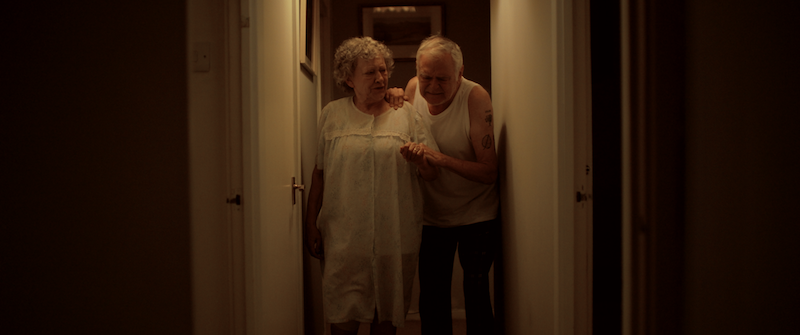
Dan: Love, loss, sacrifice and much more. It’s about an elderly couple who would do anything for one another, and that’s taken to comically absurd lengths. But it’s also about allotments and their very real decimation. I hope people are entertained, have a laugh, and maybe think a little more about the importance of allotments. And then remember the bit where Doreen cuts the brakes on a mobility scooter and laugh again.
Jack: Deadheading, fundamentally, is about love. It's wrapped up in perverse and gallows humour, but ultimately it’s about one person’s love for another. If someone could take something away from it, I would hope that it’s that this kind of ‘idealised movie love’ can and does exist. Which isn’t to say that it's without hardship or conflict, as the film demonstrates, but that its power can level anything. The song ‘A Thing Called Love’ by Johnny Cash (Jerry Reed originally) was a major influence on me when writing the script, it’s such a perfect description of the power of love.
What drew you to the darkly comedic approach to Deadheading, and how did that shape the way you told the story?
Dan: There is a British tradition of finding humour in the macabre. Sometimes a story is too serious to face head-on. It’s like the sun. A dying husband’s wish that won’t come true? Allotments disappearing at an alarming rate? Brutal. But sprinkle in a little madness and a bit of humour, and suddenly you have something that entertains while still telling a meaningful story.
Jack: After having the initial idea for Deadheading, it took many forms, forms which changed genre and tone with each new iteration. But I wanted to set myself a challenge with it, two things you don’t see very often in film are love stories between elderly people and stories about relationships where the inter-relationship struggles isn’t the obstacle of the story but instead external factors running interference to the story. Doreen and Jim, love each other at the start of the film, they love each other at the end of the film and their love is unwavering throughout. But how do you make that interesting? That’s the gauntlet we wanted to lay down for ourselves.
What were some of the key technical and creative decisions you made when bringing Deadheading to life, from cinematography and camera work to lighting, sound and editing?
Dan: Our editor, Scott Minnis, did such an amazing job of mixing the calm with the storm. There are so many breakneck (pun intended) moments, but those are balanced out by moments of real emotion and calm. That contrast was hugely important to the film.
Jack: I think one of the biggest technical challenges was the mid-film montage. Everything in there had to be so precise and the film would live and die by this moment. I had the idea to use a specific track by The Animals and to make it work, to really work, I knew it had to be planned within an inch of its life and that it would require a delicate touch in post as well. So we storyboarded it, created an animatic of it to the music and planned all of our camera moves to work within the structure of the song.
Another key aspect was creating the world that they live in, I needed Doreen and Jim’s world to feel lived in, I needed it to feel like we were watching a late chapter in a story that started over 50 years prior. This meant telling a story with the production design and luckily, Emily Healey our amazing Production Designer, understood the assignment and was able to build up their apartment so that it was rife with 50 years of story.
How did you work with the cast to bring the characters of Deadheading to life?
Dan: Doreen, played by Stephanie Fayerman, and Jim, played by Kevin McNally, had such incredible chemistry and just ‘got’ the characters. The scene where Doreen comforts Jim as he looks back on their life together really embodies this. Huge credit also goes to our Casting Director, Matt Sheppard.
Jack: Firstly, before anyone was cast, we were lucky enough to bring Matt Sheppard onboard. Matt is an incredibly intuitive Casting Director, he took one look at the script and just knew exactly what we were after. He also found Stephanie and without her this film really is nothing.
Stephanie was an absolute dynamo on set. When we were shooting at 3am on a night shoot and everyone was flagging, while Dan and I were pulling our hair out about something which now feels insignificant, Stephanie was the one cracking jokes and keeping spirits up. Not to mention turning out a ridiculously layered and electric performance.
What is your favourite scene or moment in the film, and why?
Dan: It has to be the first murder. Joyce, played by Rachel Atkins, does such an amazing job of making you utterly despise her, and the reveal of the knitting needles in the back always gets a gasp.
Jack: I think, while Stephanie carries this film with her beautifully complex performance, my favourite moment has to be when Jim (Kevin McNally), in the wrought stages of cancer treatment, breaks down in their concrete high-rise flat, wishing he could have given his wife a better life. I actually forgot to call cut on the first take of that, Kevin just tapped into some kind of elemental force and the whole crew was just silent afterwards, I’ll never forget that.
What were some of the biggest challenges you faced while making an independent short film, and how did you overcome them?
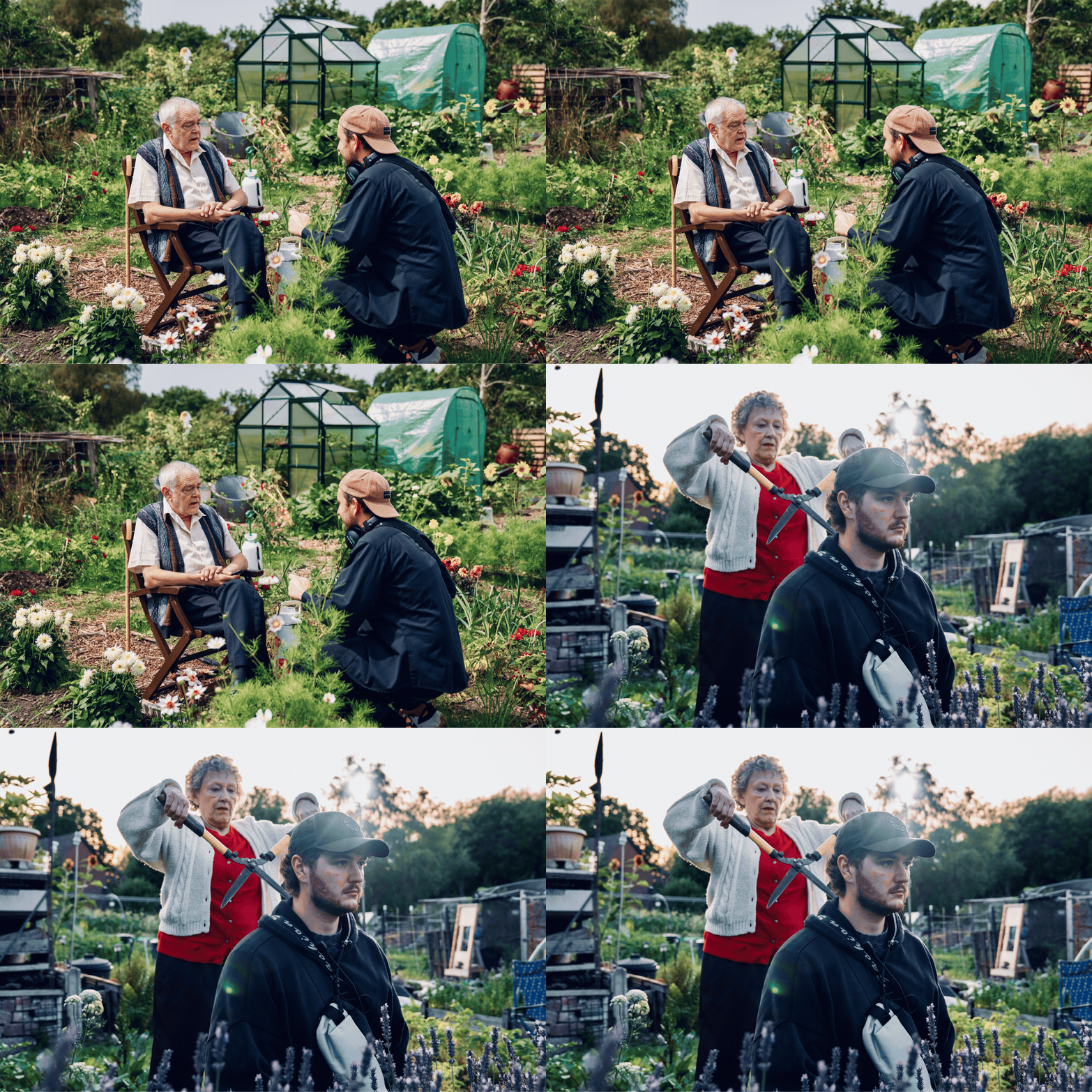
Dan: Every film is a miracle. The concept of bringing together so many people, at such specific times, on a budget that never seems to be enough is daunting, but also hugely rewarding when it all comes together. The generosity of so many people, companies and organisations made Deadheading possible. But it was always a case of asking, ‘How do we make this work financially without compromising the vision?’ And usually, that meant a cheeky ask to someone. Beg, borrow and try not to steal.
Jack: Money. Money is always the big one in all honesty. We have no shortage of talented friends and definitely no shortage of effort we’re willing to put into filmmaking. However, there is increasingly little public money floating around for the arts and we’ve never actually received any. So, every time we’ve made a film we start from a place of ‘Right, where do we try and wangle the money for this then?’ and luckily we were able to hodge podge it together from different places, including a kickstarter, a sponsorship from the National Allotment Society and a small amount of private funding.
What has winning the Sony Future Filmmaker Awards Fiction category meant to you, and how do you hope it will influence your filmmaking career?
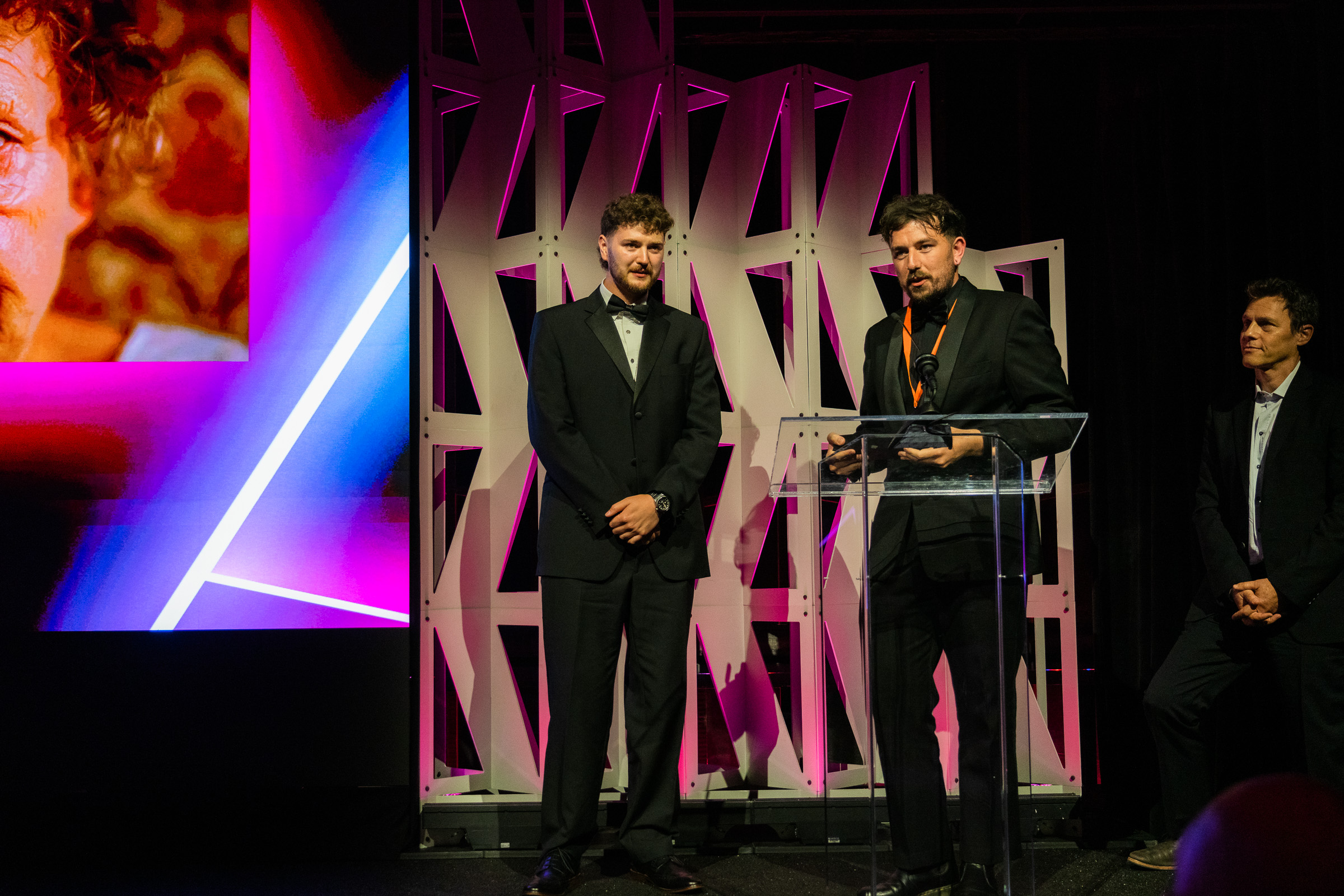
Dan: It was, is and will always be incredible. It was the cherry on top of what was one of the best weeks of my life. It was such a pleasure to be surrounded by unbelievably talented and genuinely lovely people. I hope it leads to many more films, and gives us the opportunity to keep making bigger, funnier and more ambitious movies.
Jack: Attending the week in LA was a very surreal experience, it felt like the kind of thing you can only dream of as a filmmaker at this level. To then top it off with winning, it departed the surreal and entered the truly hallucinatory.
Just the nomination, nevermind the win, has opened up so many doors and works as a real bona fide industry seal of approval. Before we were a couple of filmmakers knocking on the door with a good idea but now we have a recognition from the peak of the industry, so those conversations are easier to get started.
What advice would you give to emerging filmmakers looking to make their own short films?
Dan: Use what you have access to. Something you have, no one else will. Whether it’s a great uncle who has a farm, a sister with a creepy house, or a friend with an interesting car, use it. What is mundane to you can be indescribably interesting to the rest of us.
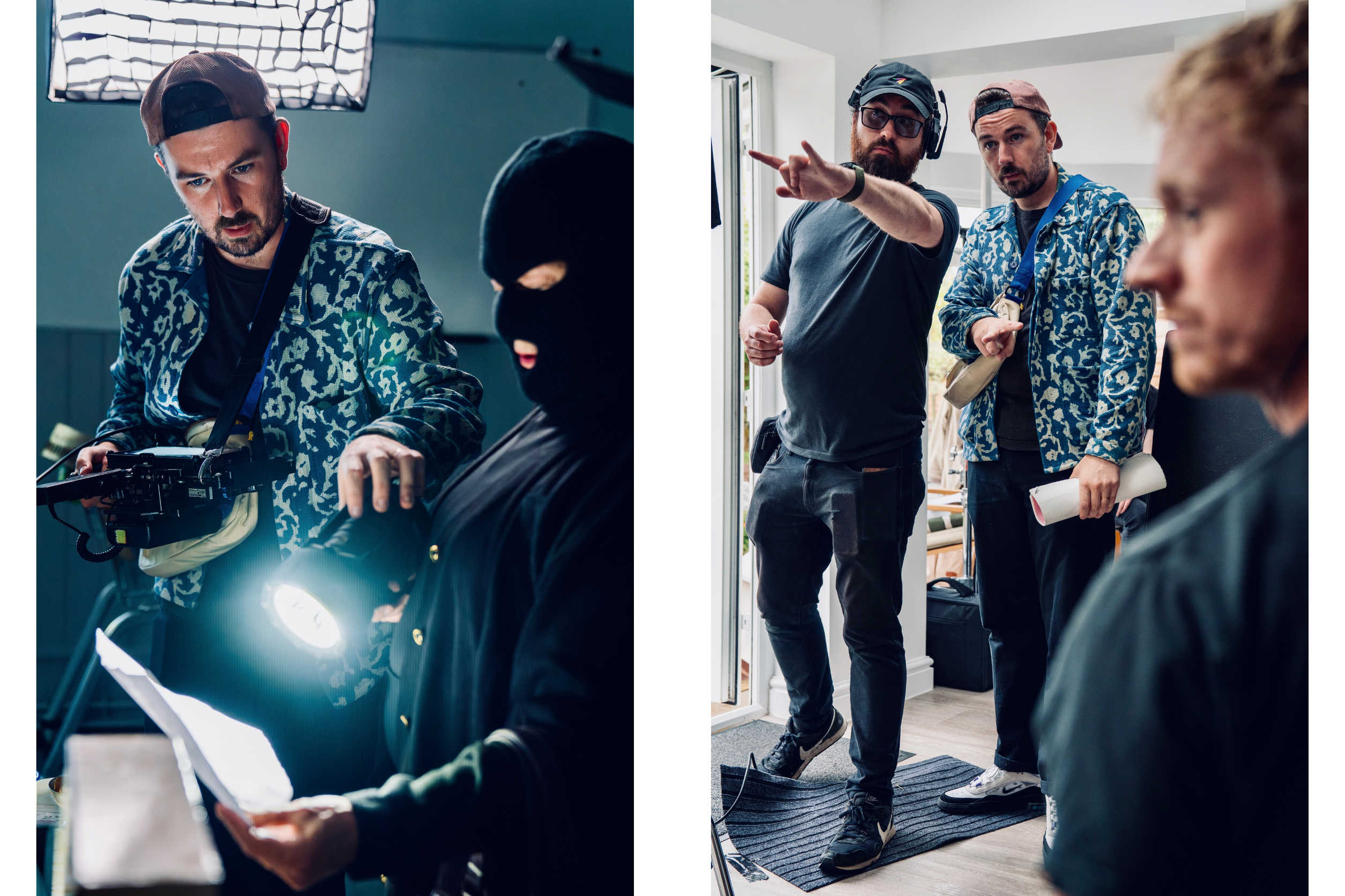
Jack: Dan and I are forever saying to each other ‘Maximum Effort.’ When one of us is phoning it in a bit, when we’re hit with a piece of bad news, when things don’t go as planned, we say ‘Maximum Effort.’ It’s how we found unconventional means of funding for our films and how we make a film look like it was shot for double the budget. But it also means that we’re never satisfied, we always want to improve and push on to the next bigger thing.
What was your favourite workshop at the Sony Future Filmmaker Awards, and what did you take away from it?
Dan: I’d struggle to pick a favourite. The quality was incredibly high, but what made the workshops so valuable was how different each one was. Every session offered a completely different perspective on filmmaking, covering producing, writing, directing, music licensing and everything in between. Zach Cregger’s was particularly inspiring, but also hilarious and brutally honest. I think the prevailing sentiment of keep going, keep making films and keep knocking on doors is what sticks with me most.
Jack: I think for me it was probably Justin Chadwick’s talk. He talked about his route into the industry but also about his passion for filmmaking and I don’t think I’ve ever heard anyone vocalise a filmmaker’s love for filmmaking as well as he did. While giving a bunch of great ideas on how to navigate the industry, he also just lit a fire in my belly that made me want to kick the door down and make a film immediately.
What are you currently working on, and what can we look forward to from you next?
Dan: A feature. A series. Maybe both. Hopefully, both.
Jack: I’ve just finished a script that has been bubbling away in the background for a while and that’s our main focus at the minute, pitching it to various studios and production companies.
Follow Deadheading, Jack Hughes and Dan Simmons on Instagram