
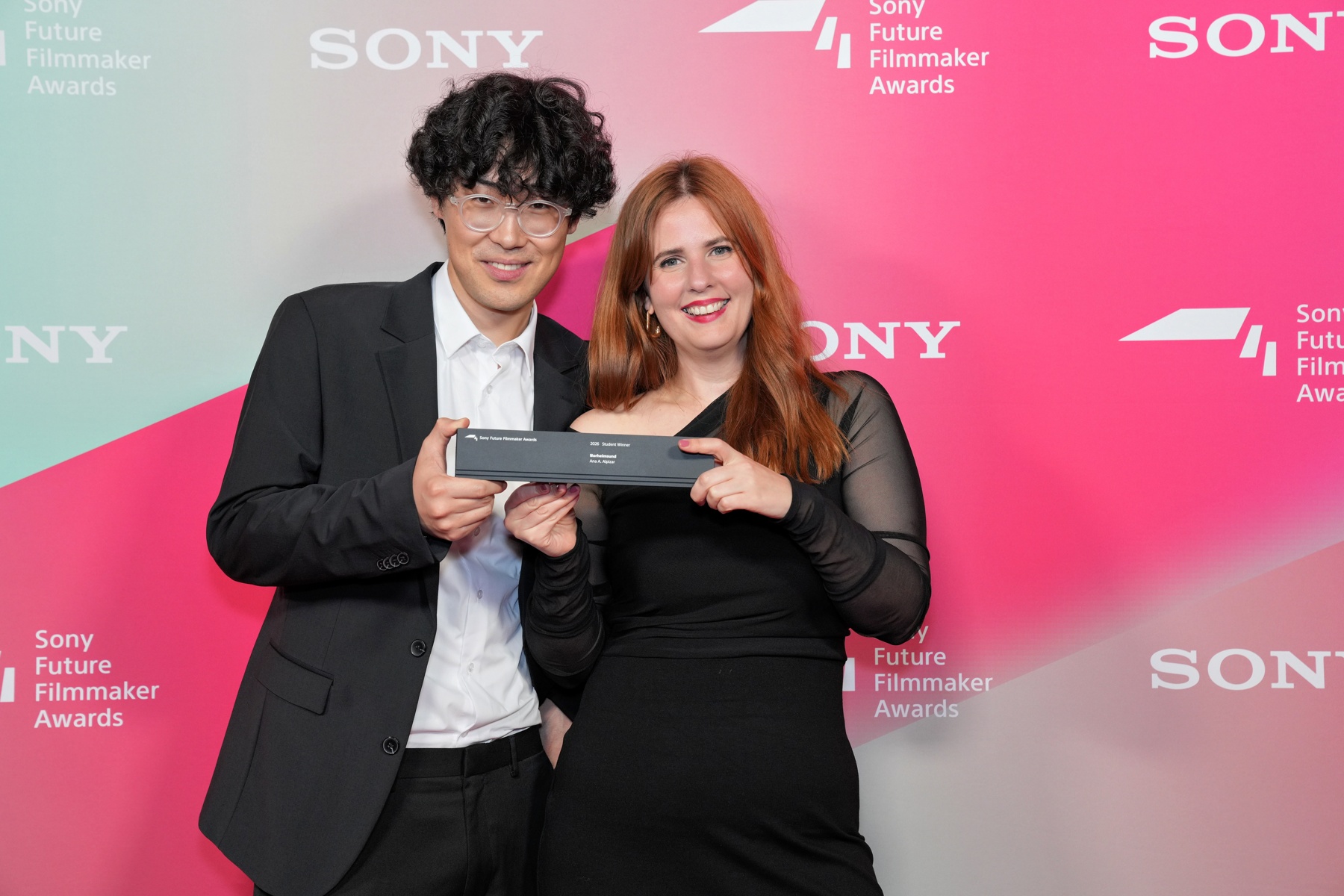
Your short film Norheimsund won the Student category in the 2026 Sony Future Filmmaker Awards earlier this year. What have you been up to since your win?
Ana: Since winning, it’s been exciting to see Norheimsund continue its journey. The film has screened at more than eighty festivals so far, and it’s been amazing to see it reach audiences around the world. I’ve also been developing the feature version with the support of TorinoScriptLab, and I’ve just finished a first draft of the script. At the same time, I’ve been editing a feature called In an Orderly Fashion. It’s a beautiful project, and I’m really enjoying being part of it.
Yuqian: I went back to China and worked as the cinematographer on two short films. After that, I spent about a month in my hometown, enjoying the summer with my family.
What first drew you to filmmaking?
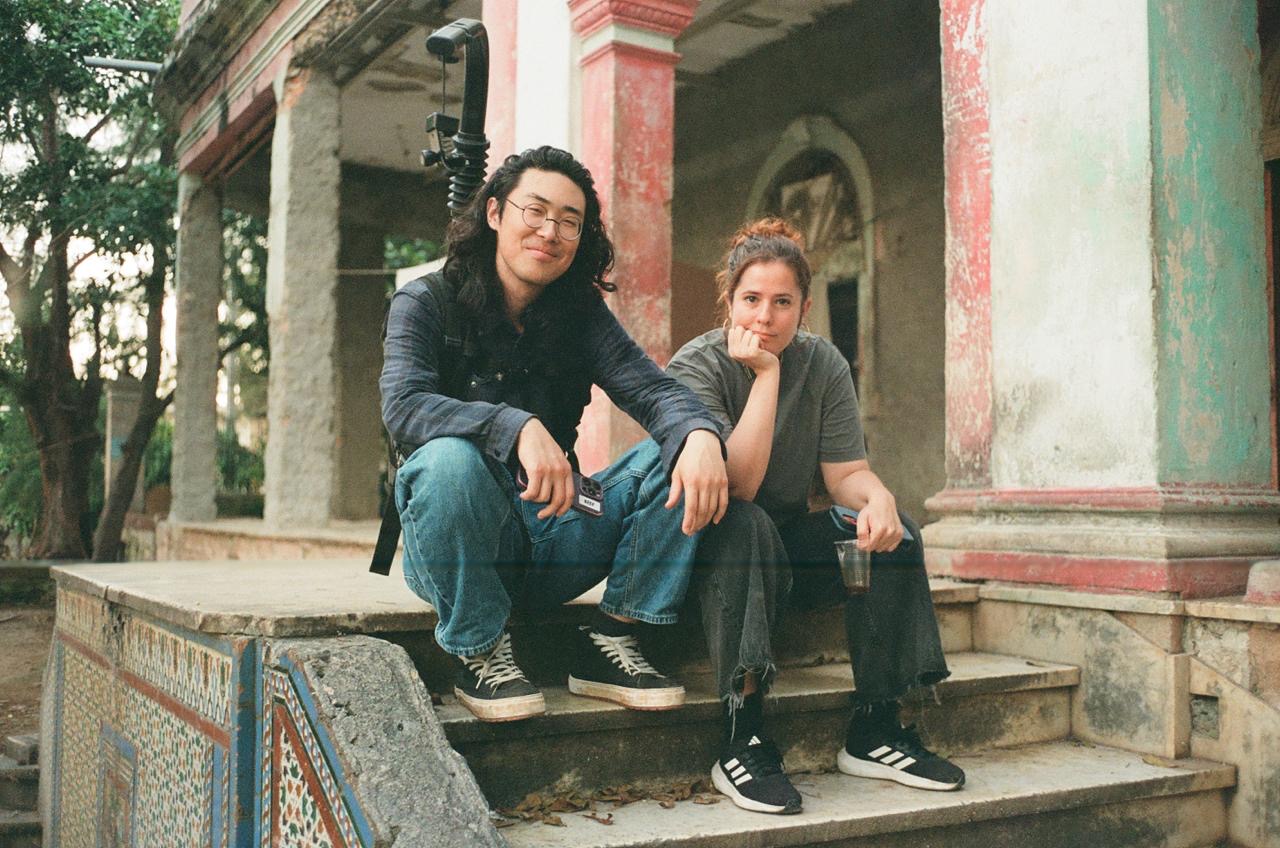
Ana: I grew up in Cuba, where there wasn’t much to do during the summers. We didn’t have internet, there were a lot of blackouts, and it was very hot. Going to the movies became a way to escape from that reality. Tickets were so cheap that I could go to the Cinematheque three times a day. I started going when I was around thirteen, sneaking into screenings. First, I fell in love with movies, and then, almost naturally, I ended up studying film.
Yuqian: I started studying painting when I was in middle school, and later went to art school. There was a period when I was watching a lot of films every day. I started paying attention to the credits, and I realized that many of the films I loved, even though they were very different from one another, had been shot by the same few cinematographers. I wanted to be able to create the images I had always wanted to paint, so I switched from fine art to cinematography. The more I studied it, the more depth I discovered. And the more I learned, the more I felt that cinematography was something I could spend my entire life exploring.
How did you work together to develop the film's visual approach? What guided your choices around framing and lighting?
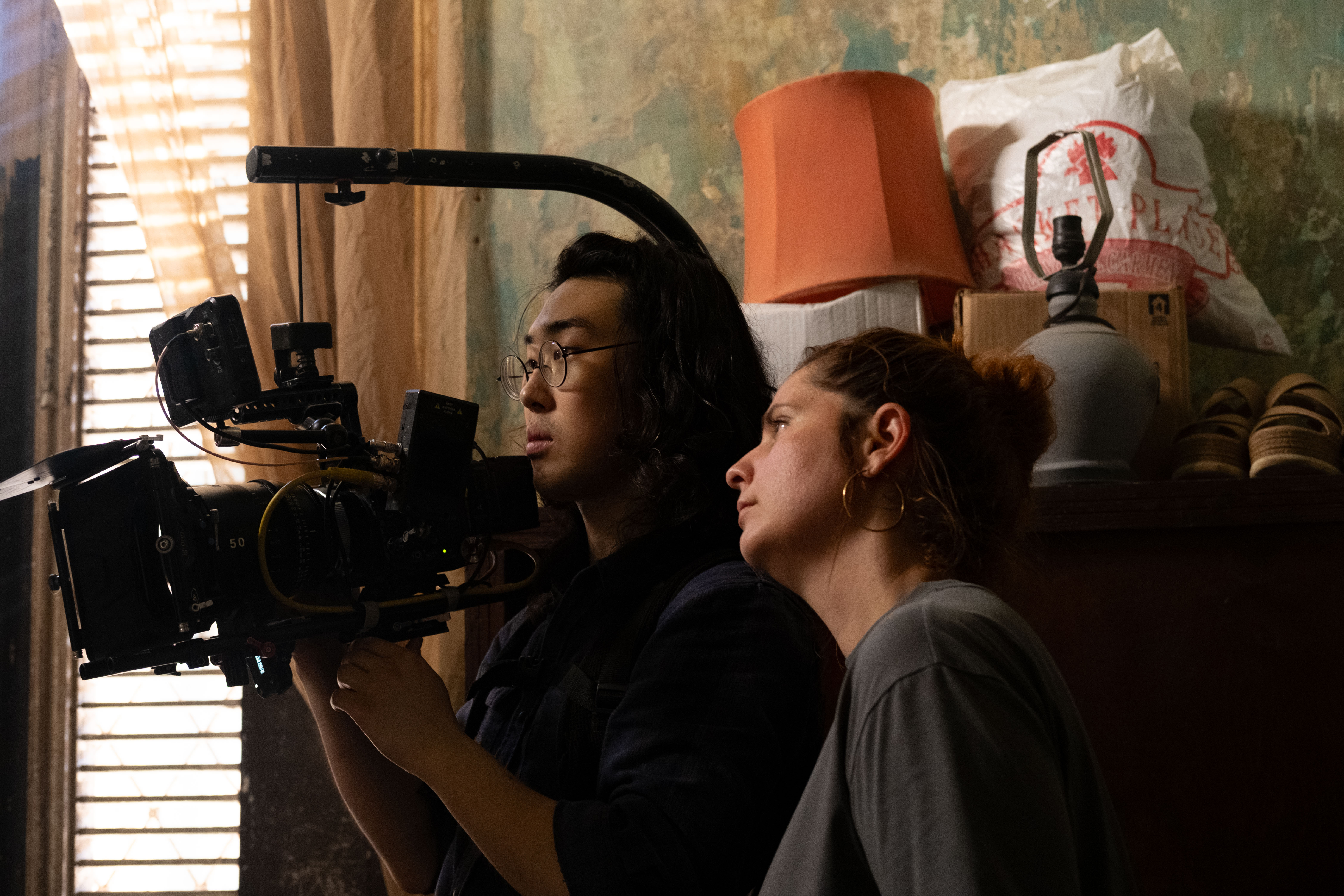
Yuqian: Ana had already chosen most of the main locations before I arrived in Cuba, so we started by walking through those spaces and talking about the story. We would imagine where a character might feel most comfortable lying down, what it might say about them if they chose to sit in one corner rather than another, or what it might suggest about their state of mind if they walked to a particular place during a conversation. We tried to explore as many possibilities as we could. I would then make sketches or take photographs to document our ideas.
I remember sitting down together and going through all the shots we had discussed. I was sketching while Ana told me what she liked and what she didn't like. Eventually, those conversations became our storyboard.
We had talked about Yasujirō Ozu's films quite early on, and I thought there was a lot we could learn from his approach to composition. The distance between characters, how much space they occupy within the frame, a certain sense of balance or imbalance, and the way he understands physical space. I was particularly thinking about Late Spring (1949). I watched it again and tried to understand how the audience enters the characters' spaces, what certain compositions mean at particular moments, and why they feel so powerful.
But I also remember that Ana and I both felt Norheimsund shouldn't be an overly composed or rigid film. I still wanted a certain sense of immediacy, of actually being there. My impression of urban Cuba was that it was restless, always full of movement and energy. I felt that atmosphere also reflected something about the characters' emotional states.
Outside of work, Ana encouraged me to wander around neighbourhoods similar to where our characters lived. I needed to absorb the atmosphere of those places. Ana and I also talked about how much we wanted to avoid that stereotypical Hollywood look of Latin America. You know, the idea that Mexico always has to look yellow, or China always has to look red. Cuba is a real place. Havana has this incredibly clear air. Sometimes the sunlight is so strong that you can almost feel it hurting your skin. Sometimes it suddenly turns cloudy and starts raining. And sometimes you get these epic sunsets with cool tones and a slight sense of melancholy. The weather changes so quickly. I found it difficult to predict its mood. What I could do, first of all, was to be honest. To look at and experience the world honestly, simply as a human being. I had to think about how the temperature and humidity would physically affect the characters, and what might be happening inside them as people living in that particular world, at that particular moment. Only then could I think about how framing and lighting might help express or strengthen those feelings.
I think honesty, genuine respect, and curiosity about the characters were my most valuable references.
What is your favorite scene or moment in the film, and why?
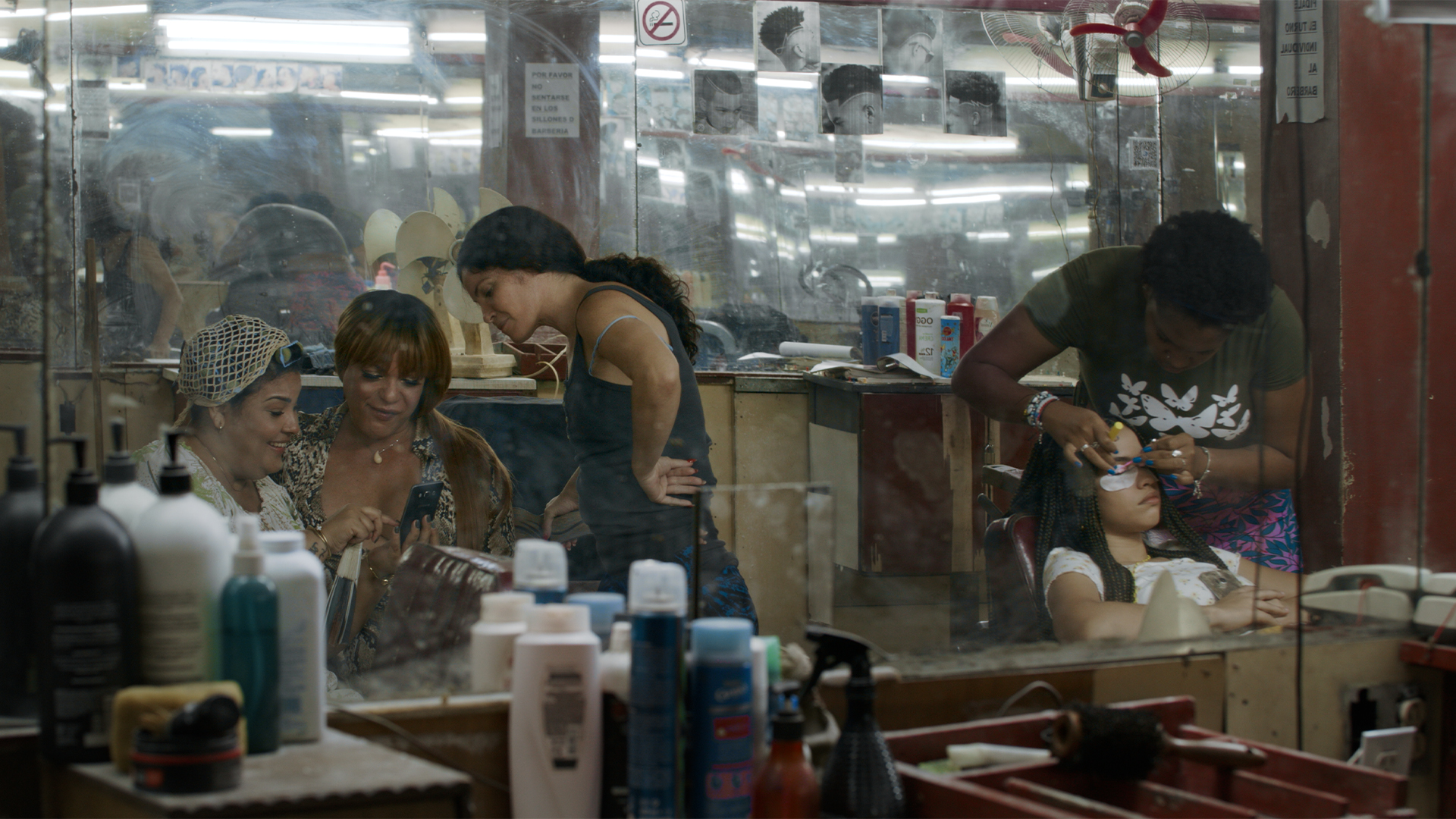
Ana: I think my favorite moment is the opening. In many ways, that scene was the starting point for the short; it was the first image that came to me. I wrote it knowing exactly how I wanted to film it and how I wanted to reveal the information gradually: first, Yaima struggling with the heat; then, Yaimita’s naked body; and, little by little, the relationship between this mother and daughter, who share a bed. I remember getting goosebumps while we were shooting it. I felt something special that I’d never felt before.
Yuqian: My favorite scene is the one at the end. The daughter comes home, and her mother is in the kitchen, sifting through rice. The mother doesn't know what her daughter has just been through. She gradually moves closer to her, and eventually sits down beside her. There was a cheap LED light in the kitchen at the location, probably around 5500K. It wasn't particularly flattering. I used a lantern to improve the direction and quality of the light, and made the lighting in the other room a little warmer. You can see the characters almost as if they're living in two different worlds. The mother is usually quite serious, but as she softens and tries to enter her daughter's world, the light on her face becomes warmer too.
How did you bring the film to life with the resources available to you? Were there any creative solutions you found particularly useful?
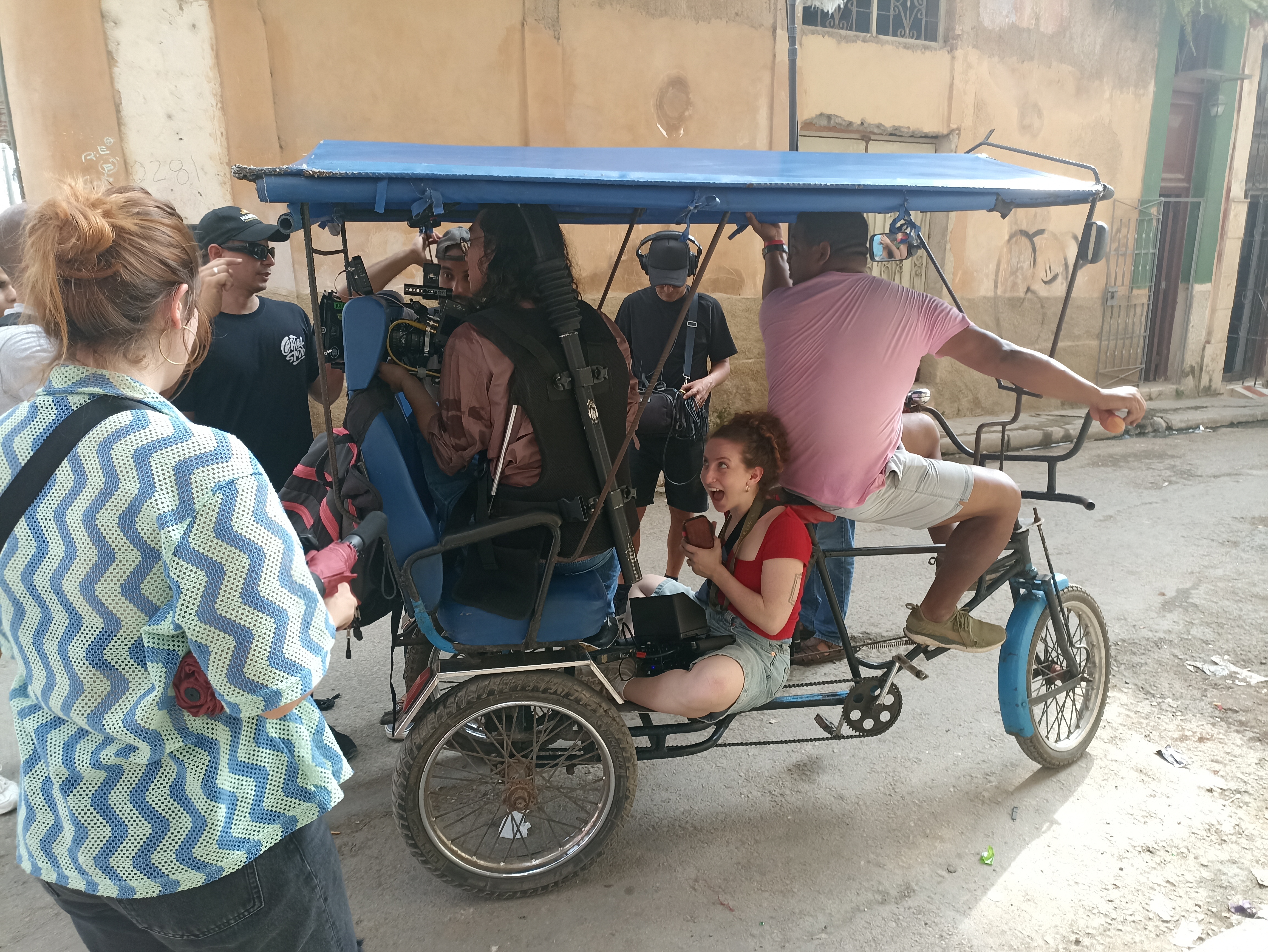
Ana: Filming in Cuba forces you to be creative; there’s no other way. Even basic things that people elsewhere might take for granted can become a problem. We struggled a lot to find locations. We had to consider the blackout schedule when choosing where to shoot and plan the shoot around it. In the end, I chose some locations not because they were my first choice, but because they were in areas with fewer blackouts. They weren’t always the spaces I had imagined, so we had to adapt the scenes to fit them. Somehow, I think that made the film richer. The reality of those spaces brought details and textures to the scenes that I might not have come up with on the page. For the final scene, for example, we had to turn a pantry into a living room because that was the space we were able to get.
Yuqian: I think the first step is to really understand the situation. What exactly are the limitations, and how serious is each one? Only then can you make a judgment about which limitations are real obstacles, which ones might simply require a different way of doing things, and which ones could actually lead to a good idea. We had a scene involving a pedicab, and we couldn't use a car rig. My first suggestion was to get two pedicabs: one for me and the camera, and another as the picture vehicle. I remember there was some hesitation about doing it that way, but to me, it seemed like the only practical solution. I had considered using a car, but cars were too noisy and produced too much exhaust. Pedicabs were much more open, and it was also easy for the two riders to coordinate their speed.
What were some of the biggest challenges in making Norheimsund while studying, and how did you overcome them?
Ana: For me, the biggest challenge was traveling to Cuba and organizing a production there with an international crew. Getting permission to film in Cuba isn’t easy, and there are so many logistical challenges involved in making a film there today. There were many moments when Madeline Finkel, the producer, and I felt like it wasn’t going to happen. If I learned anything from the process, it’s not to take no for an answer.
Yuqian: One of the biggest challenges was learning to make clear decisions under real limitations. We rarely have unlimited time or resources. And when you're shooting at multiple locations in a single day, things don't always go according to plan.
For me, the important thing was to understand what truly mattered to the story. Sometimes that meant asking myself a few more questions: What really matters for the audience to feel in this moment? What matters most to the characters? Once those things were clear, it became much easier to decide where we needed to be precise and where we could be flexible. I think a cinematographer's responsibility goes beyond creating beautiful images. Every decision we make affects the director, the actors, and the entire crew. Sometimes the best decision isn't the most ambitious one, but the one that allows the film to move forward without losing what makes it meaningful. That's something I continue to learn with every film.
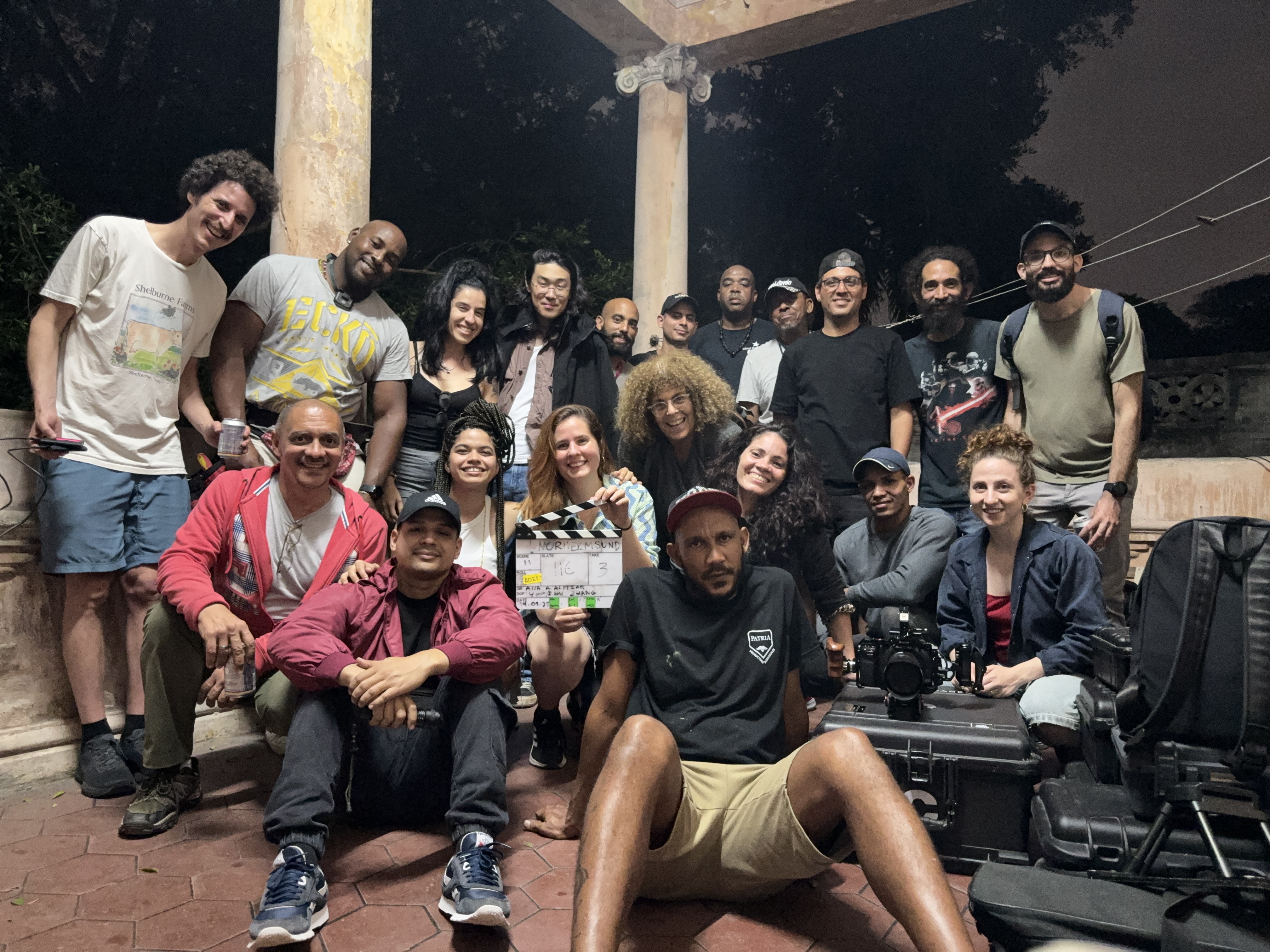
What has winning the Sony Future Filmmaker Awards Student category meant to you, and how do you hope it will influence your filmmaking career?
It’s a very special kind of recognition, and we feel incredibly fortunate to have received it. Having our work seen and being able to connect with filmmakers and friends from around the world has been really meaningful. We think experiences like this give us more confidence to be even more honest, creative, and uncompromising in our filmmaking.
What advice would you give to other student filmmakers looking to make their own short films?
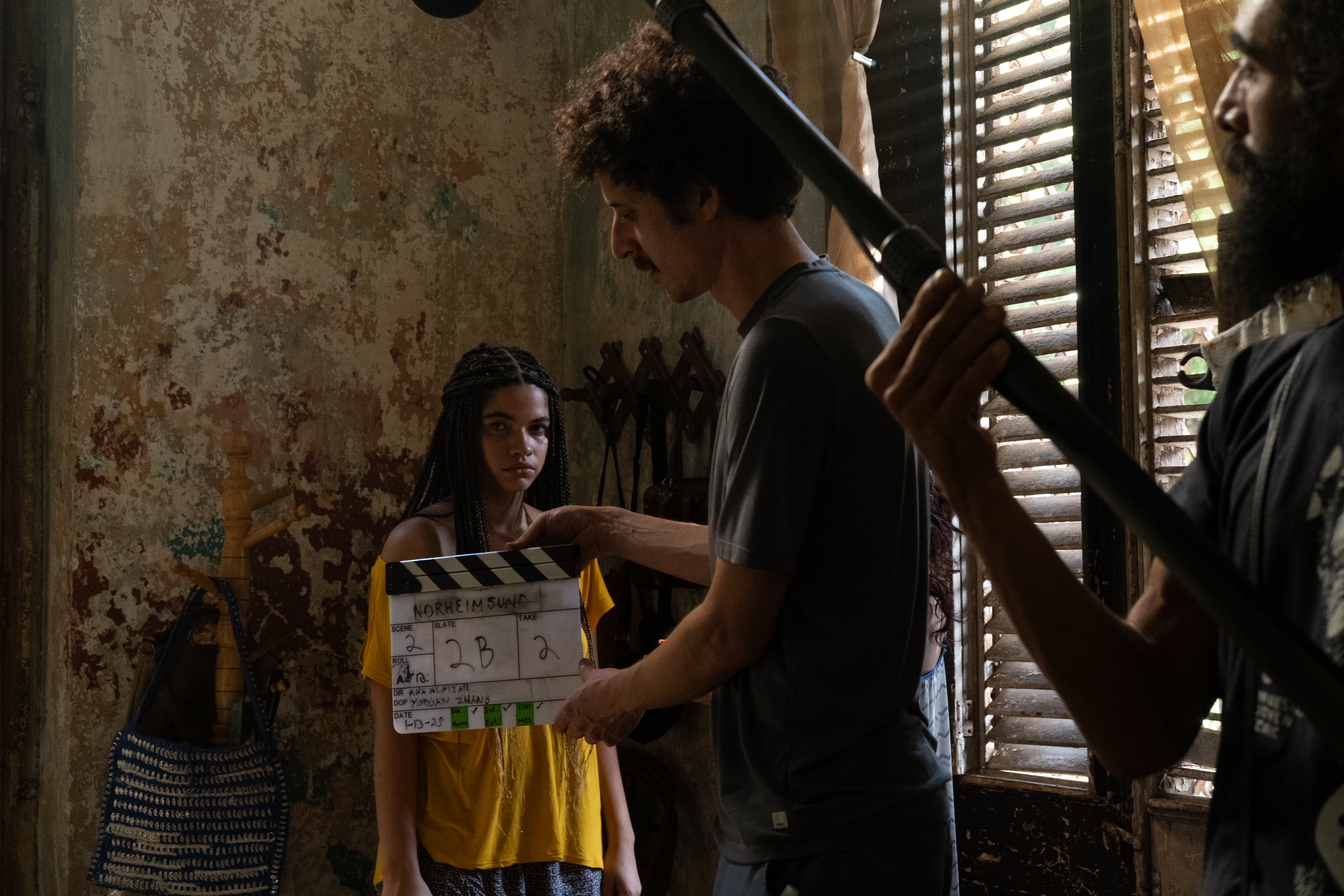
Ana: I’d say to look for stories that matter to you, stories you really care about, and not to worry too much about trends or what other people expect from you. As a filmmaker, being authentic and staying true to yourself is the best thing you can offer.
Yuqian: For cinematographers, I would say: take good care of your directors. Ask more questions, and listen carefully. Cherish every opportunity to collaborate, but at the same time, respect your own feelings and instincts. And always communicate honestly.
What was your favorite workshop at the Sony Future Filmmaker Awards, and what did you take away from it?
Ana: I really enjoyed Zach Cregger’s talk. I still think about his “elfing” technique: imagining that you’ve hired a little elf to write your first draft for you. That way, you don’t put pressure on yourself to make it good right away, you just let the ideas come out. Then you go back and rewrite everything yourself. I found that idea really freeing.
Yuqian: I actually enjoyed all the workshops about cinematography and imaging technology, including the ones on 3D cinematography, virtual production, and HDR color with the Sony VENICE 2. Before that, I don't think I had ever fully understood what made HDR so special. I used to think, well, didn't we already have incredibly colorful images back in the film era? Maybe HDR was just another new technical term. But during the workshop, we shot some footage of highly saturated blue neon lights and compared the HDR and SDR versions. That was when I realized how significant the difference could be. In a way, HDR expands the range of brightness and color intensity that we can actually experience on screen. I think those new possibilities are incredibly important.
What are you currently working on, and what can we look forward to from you next?
Ana: I’m currently developing the feature-length version of Norheimsund. I’m working on the script and hope to find the financing to bring the film to life.
Yuqian: In August, I shot a short film called A-khîm in the Park in Guangzhou, China, directed by Fei Yu. Thanks to the support of the The One International Women's Film Festival and Sony China, we were very fortunate to be among the first productions in China to shoot with the Sony FX5. As a cinematographer, that was definitely a privilege, and I was genuinely excited about it. Some parts of the film take place in the middle of a very densely populated city, as well as in public parks. We needed a cinema camera that could deliver high image quality while being small and discreet enough to capture spontaneous moments of everyday life. The Sony FX5 turned out to be exactly what we needed for those situations. I really hope everyone gets to see the film soon.
Follow Ana A Alpizar and Yuqian Zhang on Instagram.